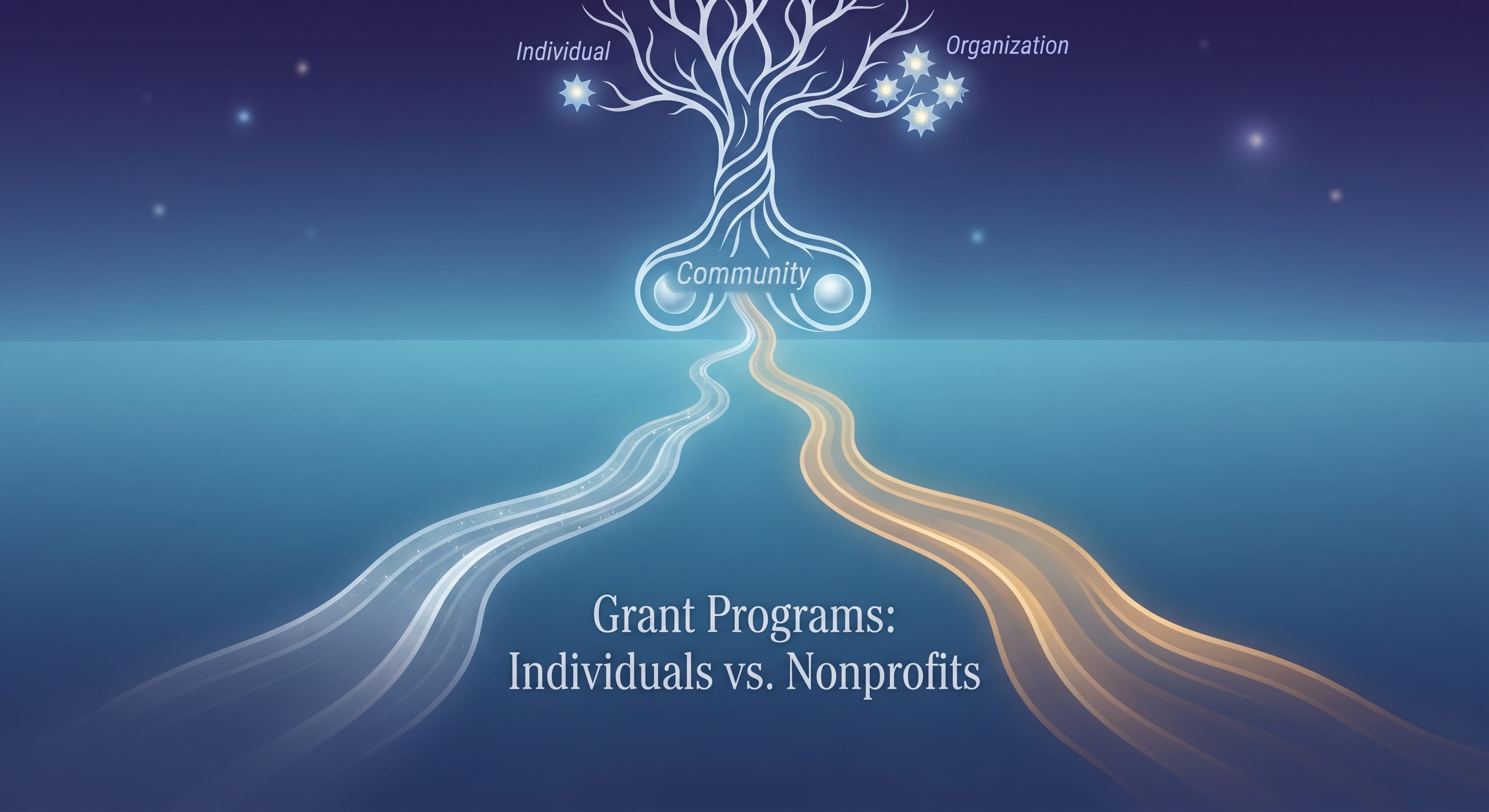
An individual searching for grant funding using the same strategy that works for a nonprofit organization usually hits a wall fast, since the vast majority of grant funding in the United States flows specifically to organizations rather than individual people. That mismatch between expectation and reality sends a lot of individual applicants down a frustrating path before they realize the strategy itself needs to change.
Most government and foundation grant programs require applicants to be a recognized legal entity, typically a nonprofit organization holding tax exempt status, a government agency, or in some cases a for profit business, rather than an individual person applying directly for personal funding. This structural reality shapes how individuals pursuing personal projects, research, or creative work need to approach grant seeking very differently than an established organization would.
Why Most Grant Funding Targets Organizations
Funders generally prefer working with established organizations because organizational structure provides accountability mechanisms, a board of directors, financial audits, formal reporting systems, that give funders confidence their money will be tracked and used appropriately, confidence that is harder to establish with an individual applicant lacking this kind of institutional infrastructure.
Tax exempt status specifically matters for many funders, since donations and grants to a recognized 501c3 nonprofit organization carry tax advantages for the funder that simply do not exist when funding flows directly to an individual, making organizational giving more attractive from a tax planning perspective for many foundations and corporate giving programs.
Government grant programs in particular are often statutorily restricted to funding specific types of entities, meaning the underlying law authorizing a grant program explicitly defines who can receive funds, and this legal restriction cannot be worked around simply by an individual applicant presenting a strong enough project proposal.
Where Individuals Can Actually Find Funding
Individual artist grants, fellowship programs, and research grants represent a genuine exception to the organizational funding pattern, with specific foundations and government agencies maintaining programs explicitly designed to fund individual creative, academic, or research work rather than institutional activity.
Fiscal sponsorship offers a practical workaround for individuals pursuing a project that would otherwise only qualify for organizational funding, where an established nonprofit agrees to receive and administer grant funds on behalf of an individual project, typically in exchange for a small administrative fee, allowing the individual’s project to access funding sources that would otherwise be entirely closed off.
Scholarship programs, while technically distinct from grants in some formal definitions, function similarly for individuals pursuing education, and many of the same search strategies used for identifying grant opportunities apply directly to finding scholarship funding as well, particularly through university financial aid offices and professional associations tied to a specific field of study.
Building a Path to Funding as an Individual
Partnering with an established organization already working in a related space, rather than pursuing a project entirely independently, opens access to organizational grant opportunities that would otherwise be completely unavailable to an individual applicant working alone, while also potentially bringing valuable mentorship and infrastructure support to the project itself.
Researching field specific individual grant and fellowship programs directly, since these tend to be far less visible in general grant search tools than the much larger volume of organizational funding opportunities, requires searching within professional associations, university programs, and specialized foundations focused on a specific creative or research discipline rather than relying on broad general grant databases.
Reviewing how community innovation grants programs sometimes carve out specific individual eligible categories within an otherwise organization focused program clarifies whether a particular funder maintains any pathway for individual applicants at all, since some programs quietly support both organizational and individual applicants under the same broader initiative without heavily advertising the individual eligible pathway.
Joining professional networks or associations tied to a specific field can also surface individual funding opportunities well before they appear in broader searches, since many of these organizations circulate grant and fellowship announcements directly to members ahead of any public posting.